
Why it matters
An attic needs to breathe
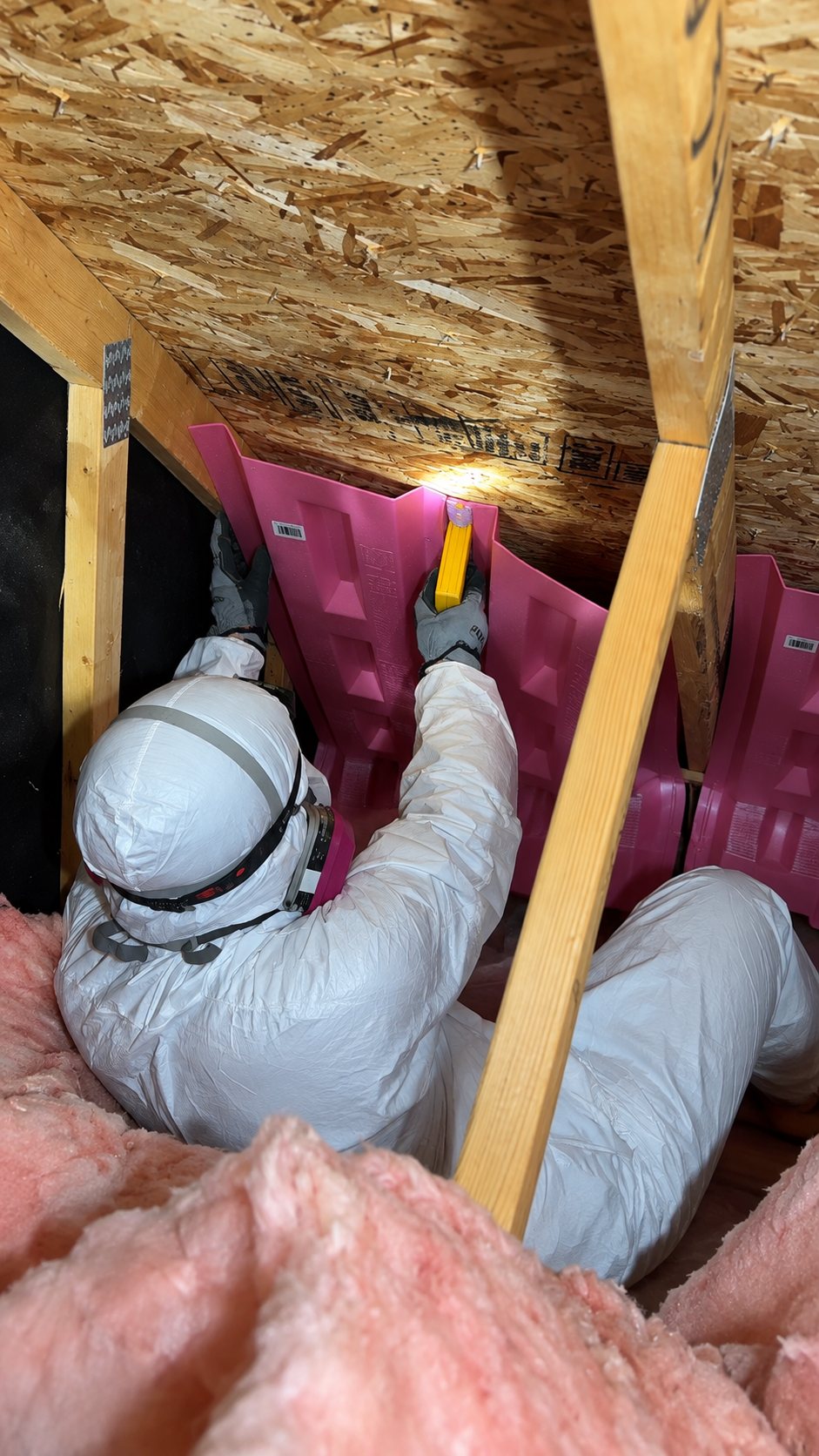
Soffits are the panels under the roof overhang. When perforated, they let in the fresh air that ventilates the attic. When insulation is blown right to the roof edge, it blocks that air inlet: ventilation stops and moisture stays trapped in the attic.
Possible result: frost in the attic, ice dams, ceiling water stains and a roof that wears out faster. Baffles prevent this.
Why insulation often blocks soffits · Why ventilation matters
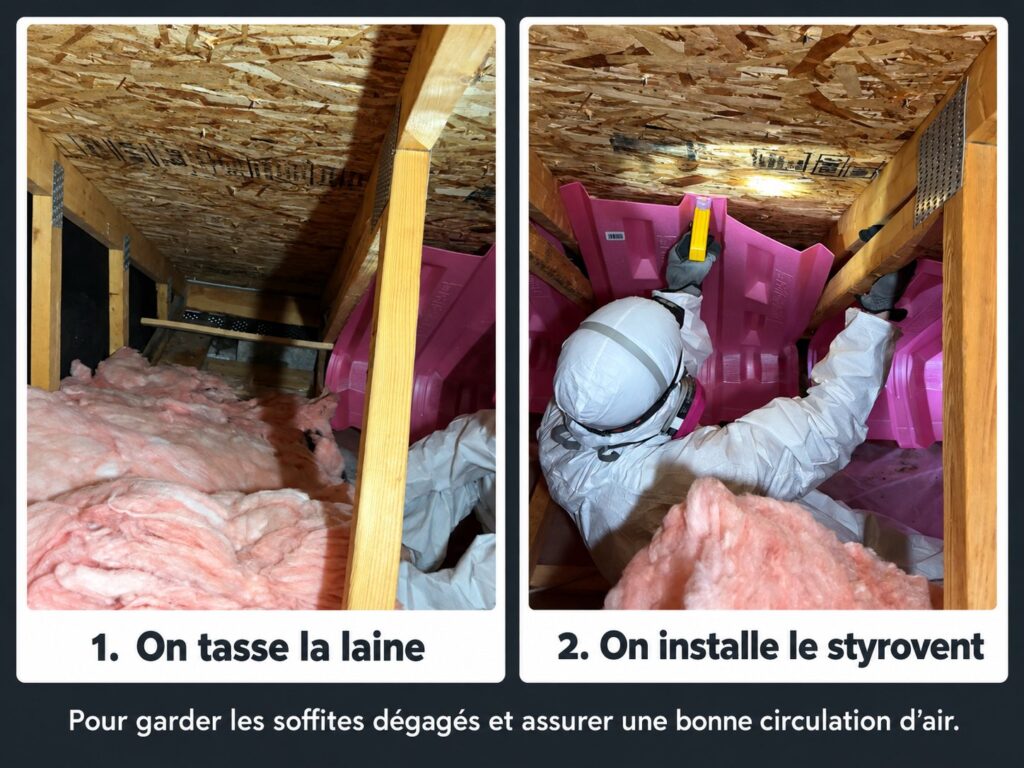
Beforeblowing: insulation pushed back, then the Styrovent goes in.
The method
Three steps, in this order
This is the sequence the crew follows on a typical job, even in very low attics, where it is often overlooked.
01
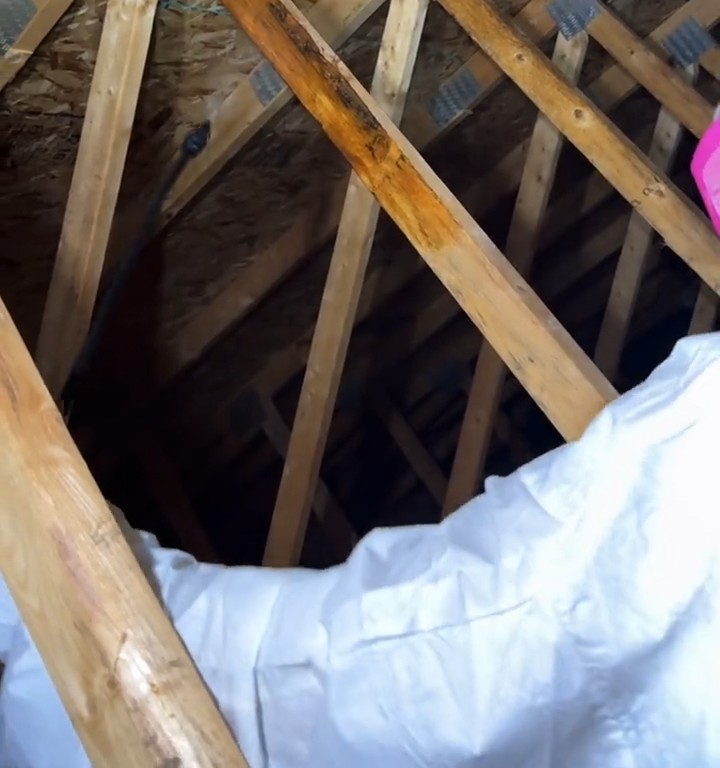
Clear the soffits
Insulation at the roof edge is pushed back or removed to reopen the soffit air inlet.
02
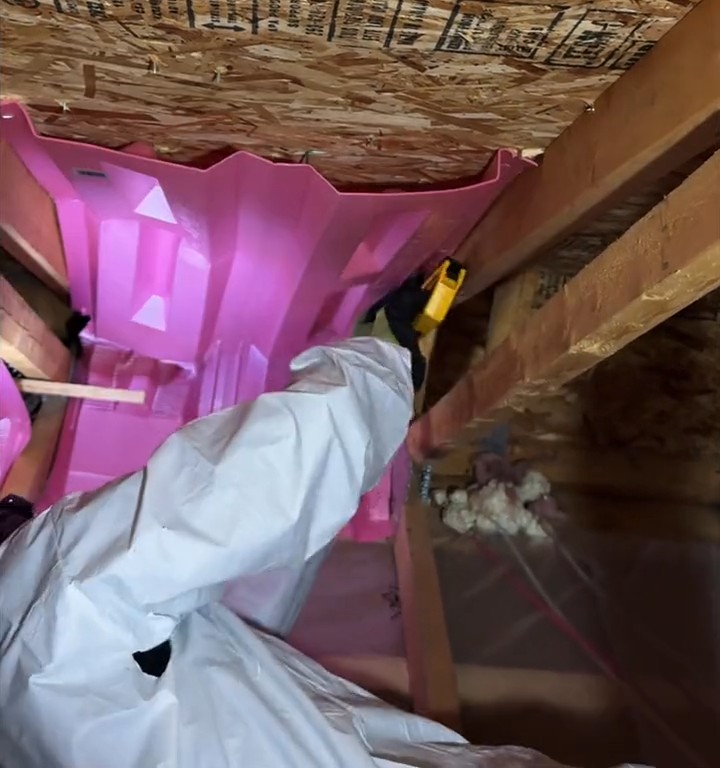
Install the baffles
Styrovent baffles are stapled between the rafters, above the exterior walls. They keep an air channel open between the insulation and the roof deck.
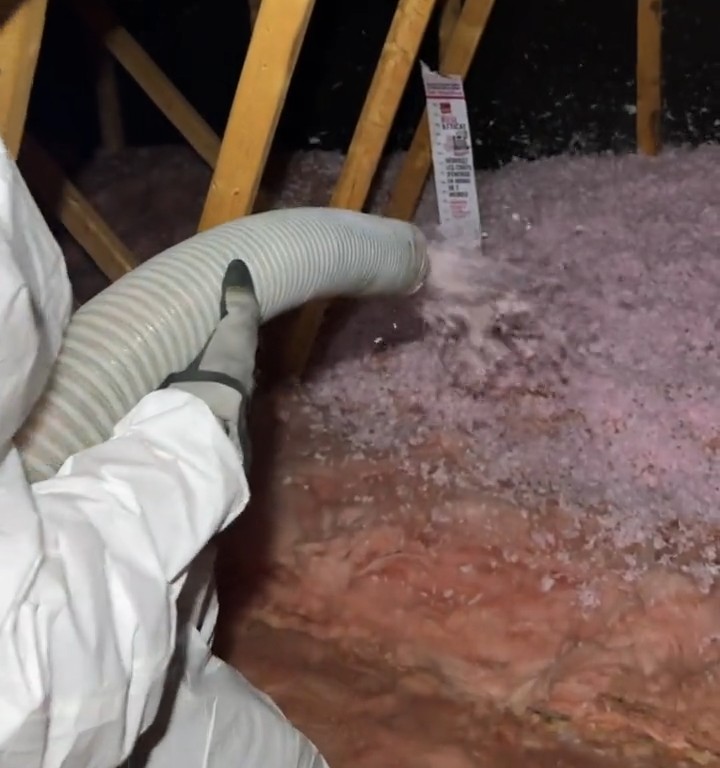
03
Blow in the insulation evenly
Now the attic can be insulated right to the edge without blocking ventilation, with depth rulers for an even layer.
On video
The work, in 20 seconds
- Clearing the soffits
- Installing the Styrovent baffles
- Preparing to blow, with depth rulers stapled to the framing
- Treating the wood
- Blowing in the insulation
Filmed on a real job site, with captions in French.
Watch for
Signs of poor attic ventilation
Frost in the attic
Moist air condenses on cold wood in winter. Learn more
Ice dams
Large icicles and snow melting fast on the roof. The causes
Ceiling water stains
Often in spring, after the thaw. Understanding stains
Blocked soffits
Insulation blown to the edge blocks the air inlet. Why it happens
Very hot attic in summer
Heat builds up and comes through the ceiling. Upstairs heat
Rising bills
Thin or compressed insulation, air leaks. The signs
What is a soffit?
The panels under the roof overhang. When perforated, they let in fresh air that ventilates the attic.
What does a baffle do?
Installed between the rafters above the exterior walls, it keeps an air channel open between the insulation and the roof deck. It lets you insulate right to the edge without blocking ventilation.
Are baffles required?
Wherever an air inlet through the soffits must stay clear, a space of at least 63 mm must be kept between the insulation and the roof deck. Baffles are the standard way to achieve this. Read the full answer
What if my attic is very low?
That is exactly where baffles are often overlooked. We check access and available space during the free assessment.
Who installs the baffles?
The work is done by the licensed contractor responsible for the project, who also prepares the quote. Isolation Dumont assesses the attic and follows up on your file.