

A complete approach
From diagnosis to work, one point of contact
Isolation Dumont assesses your attic for free, explains what we observe and follows up on your file, including financial assistance.
- Free, no-obligation assessment
- Ventilation first: soffits and baffles
- Even blown-in insulation, aiming for R-60 when possible
- One contact for your questions, from start to finish
When work requiring a licence is recommended, the quote, contract and invoicing are handled by the licensed contractor responsible for the project, who also carries out the work.

$0for the assessment, no obligation
Our services
Six ways to make your attic perform
01
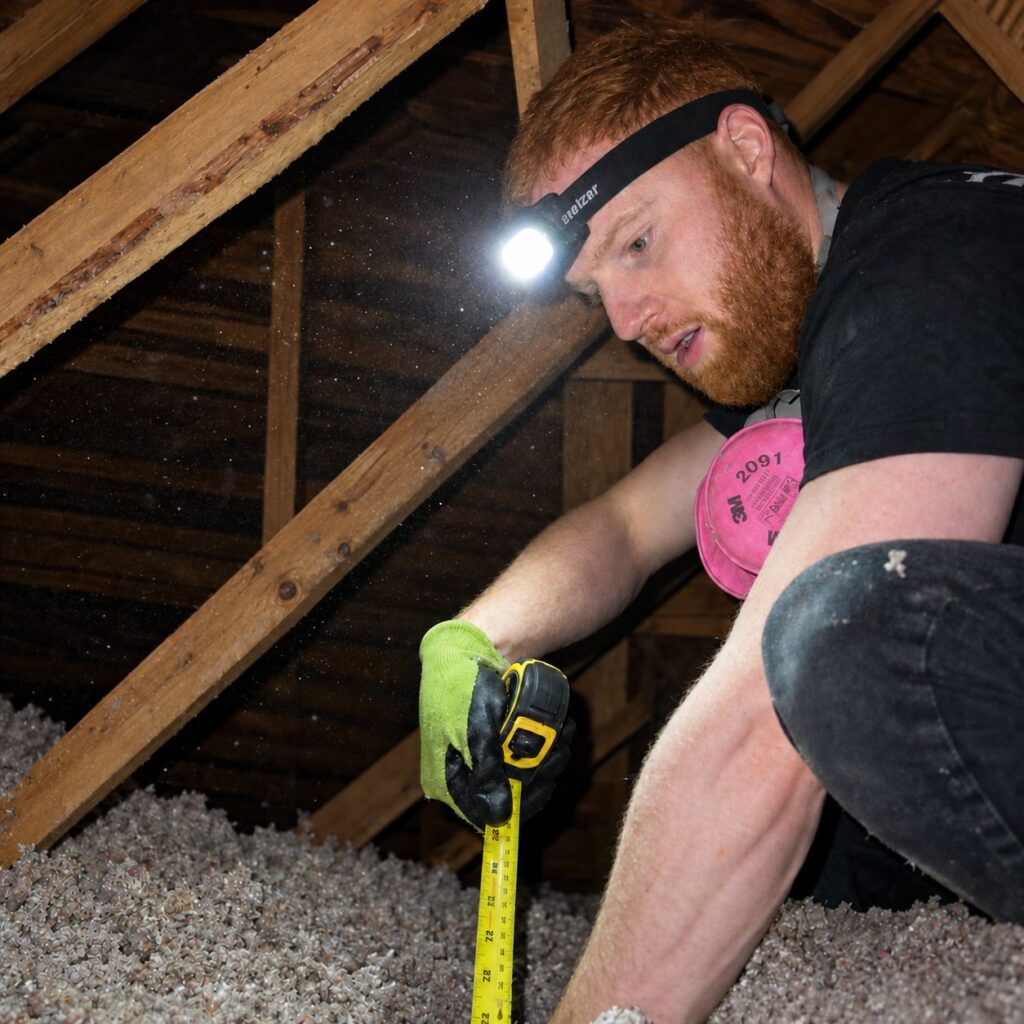
Free attic assessment
We measure the insulation depth in several places and check its condition, the soffits, baffles, moisture and air leaks. Then we explain what we saw, in plain language.
- Typical length: 30 to 60 minutes
- No obligation to go ahead with work
02
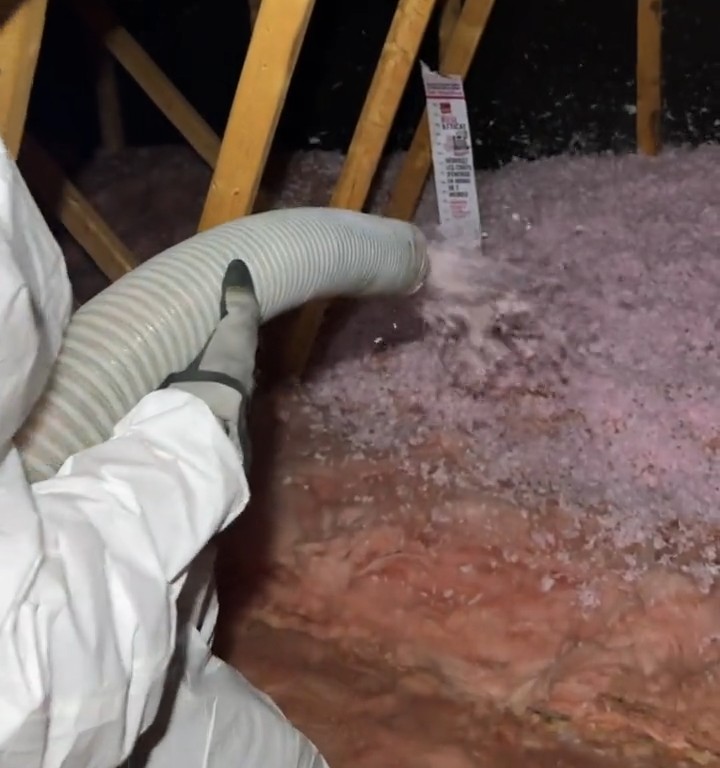
Blown-in attic insulation
Loose-fill insulation, blown in with a machine, covers the whole surface evenly, including hard-to-reach corners. The goal: fewer weak spots and a high R-value — often R-60 when the attic allows it (the LogisVert minimum is R-50).
03
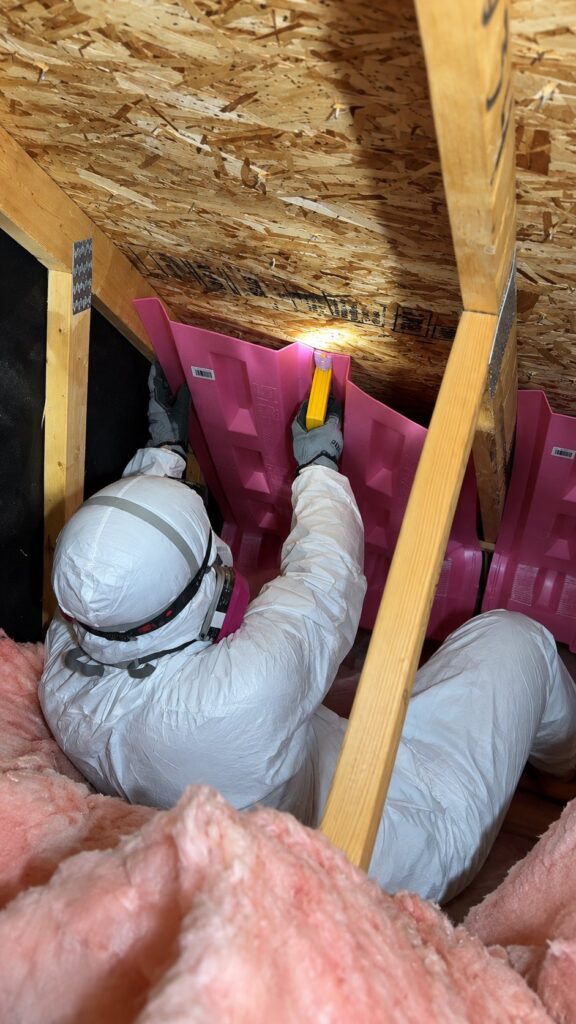
Soffits and baffles
Before adding insulation, we keep the air moving: soffits are cleared and Styrovent baffles are installed between the rafters. Less moisture, less frost, a roof that lasts.
04
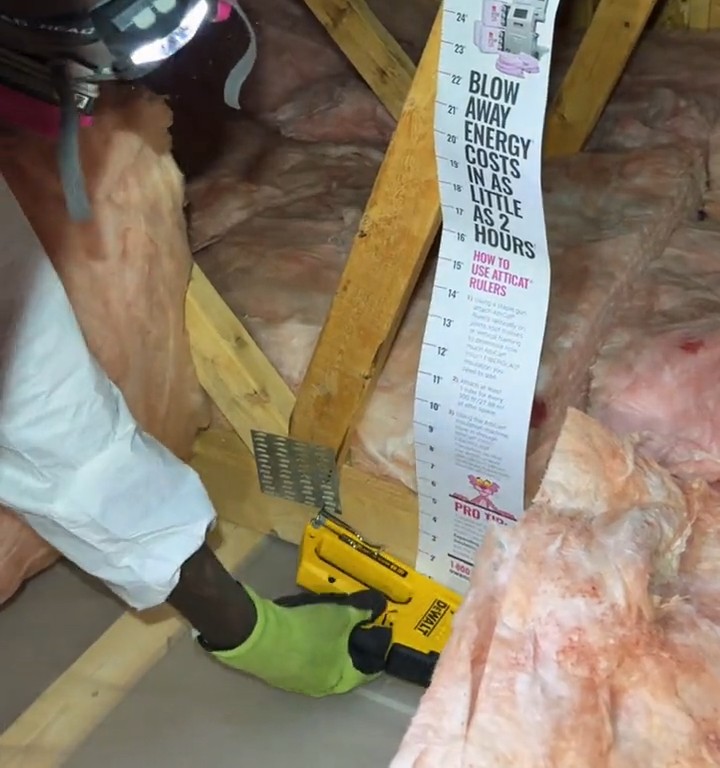
Air sealing and air leaks
Insulation slows heat, but not air. Attic hatch, recessed lights, ducts: sealing air leaks before insulating protects performance and durability. It is also a LogisVert requirement for the roof.
05
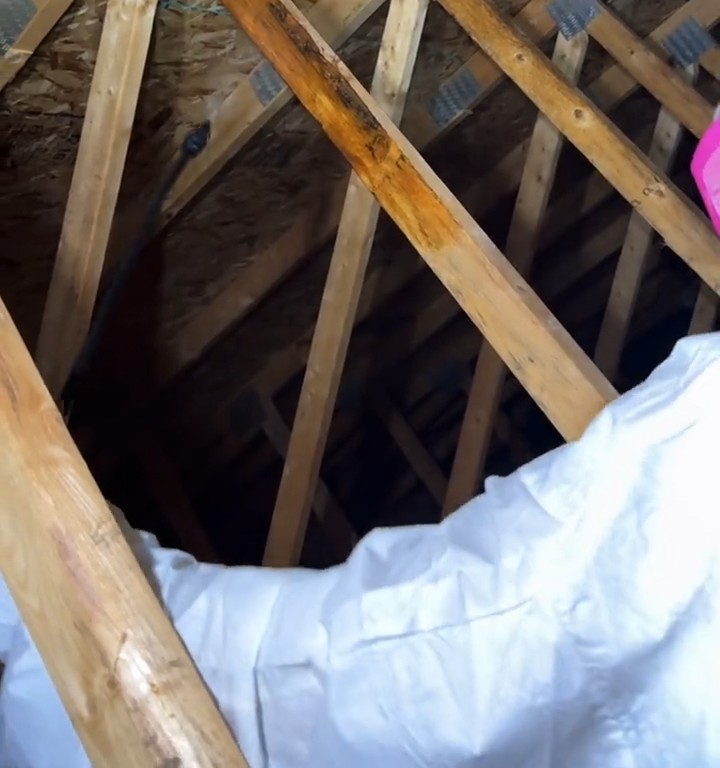
Old insulation: keep, top up or remove
Dry, clean insulation can stay under the new layer. Soiled or wet insulation, sawdust or animal damage call for removal. For vermiculite: a lab test and, if needed, removal by a specialized company.
Adding over the old · Vermiculite and sawdust · After animals

06
Help with financial assistance
LogisVert and Rénoclimat have their own requirements. We explain what seems to apply to your house and which documents are usually required. You submit the application and receive the assistance.
Transparency
Who does what
| Step | Who handles it | What you get |
|---|---|---|
| Request and call-back | Isolation Dumont | A call to understand your situation and schedule the assessment |
| Attic assessment | Isolation Dumont | Clearly explained observations, free and without obligation |
| Quote, contract and invoicing | The licensed contractor responsible for the project | A written quote for work that requires a licence |
| Work | The licensed contractor responsible for the project | The accepted work is carried out |
| Follow-up | Isolation Dumont | One contact for your questions, including about financial assistance |
Before accepting a quote, you can check the contractor’s licence with the RBQ (in French) and make sure the quote states the final R-value, baffles and air sealing. What a quote should include