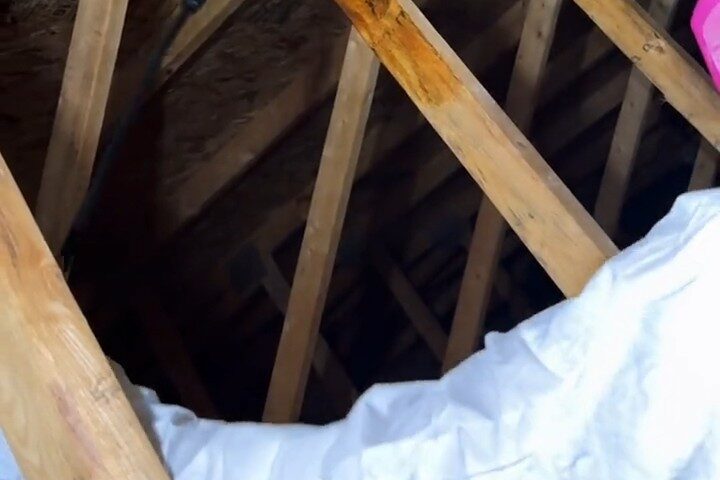
Attic insulation basics
Why insulate the attic first in Québec?#
Heat rises: the attic is one of the main areas of heat loss in a house. It is also, in general, the least expensive and most cost-effective energy-efficiency upgrade, especially with winters like ours.
Source (in French): Isoler correctement l’entretoit (Government of Québec)
What R-value is recommended for an attic in Québec?#
Aim for at least R-50 (RSI 8.8). It is the reference target for an attic in Québec and the minimum required by Hydro-Québec’s LogisVert program for roof insulation.
Source (in French): LogisVert participation guide (Hydro-Québec)
What is the difference between R-value and RSI?#
They are two units for the same measure: thermal resistance. R-value is imperial and RSI is metric. To convert, RSI = R ÷ 5.678, so R-50 is about RSI 8.8.
Source (in French): Isoler correctement l’entretoit (Government of Québec)
How many inches of insulation does it take to reach R-50?#
With blown fibreglass, usually 16 to 20 inches (40 to 50 cm), depending on the product. With cellulose, a little less. The manufacturer’s coverage chart gives the exact depth to install.
How do I know if my attic has enough insulation?#
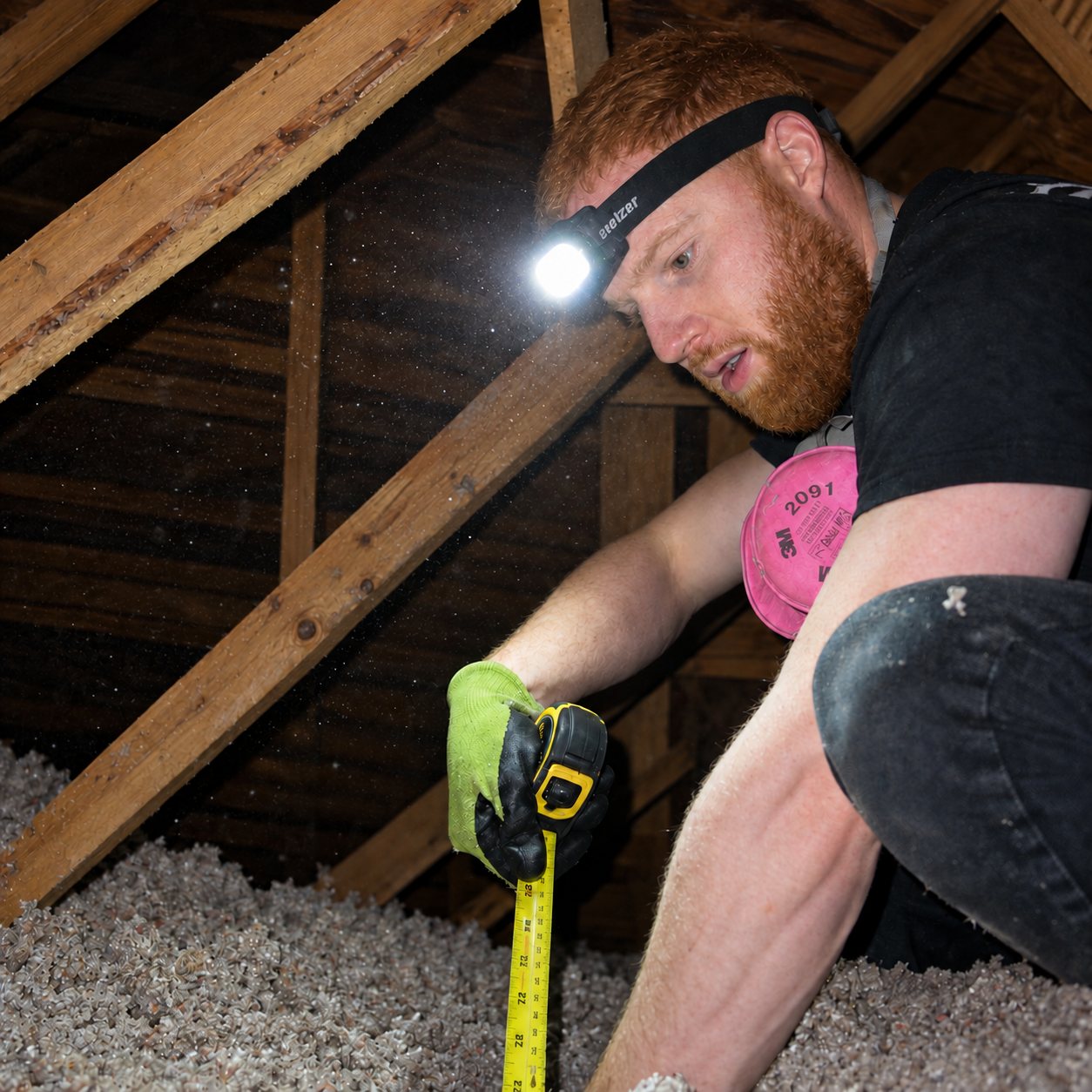
Measure the insulation depth in several places. If you can see the tops of the joists, the insulation is almost certainly insufficient. An assessment looks at depth, insulation type, ventilation and air leaks.
What is the typical R-value of an older Québec house?#
Houses built before the 1980s often have between R-10 and R-20 in the attic, sometimes less when the original insulation is sawdust, wood shavings or settled vermiculite.
Does insulation lose effectiveness over time?#
Fibreglass does not break down, but any insulation loses effectiveness if it is compressed, wet, soiled by animals or displaced. Cellulose settles more than fibreglass over the years.
Can new insulation be added on top of the old?#
Yes, if the old insulation is dry, free of mould and animal contamination, and contains no vermiculite or asbestos. Otherwise, it must be removed first. See also: insulating over vermiculite and insulation soiled by animals.
What are the signs of a poorly insulated attic?#
High heating bills, an upstairs that is cold in winter and hot in summer, snow that melts quickly on the roof, ice dams, large icicles along the gutters and frost in the attic.
Attic, roof space, “entretoit”: are they the same thing?#
Yes, in everyday Québec usage. These terms describe the space between the top-floor ceiling and the roof. “Entretoit” is the technical French term most used by assistance programs.
Winter: ice dams, frost and cold
What causes ice dams on the roof?#
Heat from the house escapes into the attic and warms the roof. Snow melts, the water runs down to the roof edge, which is cold, and refreezes. Ice builds up and forms a dam that holds water back.
Can ice dams cause water leaks?#
Yes. Water trapped behind the dam backs up under the shingles and seeps into the attic, walls and ceilings. It is a common cause of water damage in late winter in Québec.
How do you prevent ice dams for good?#
By combining three things: enough insulation (R-50), sealing air leaks from the ceiling into the attic, and effective ventilation from the soffits to the ridge. Heating cables only treat the symptom.
Are large icicles along the roof edge a problem?#
Large, repeated icicles often point to heat loss through the roof, the same cause as ice dams. They are also a danger to people below and weigh down the gutters.
Why does snow melt faster on my roof than on my neighbours’?#
It is a classic sign of heat loss through the attic: not enough insulation, air leaks or poor ventilation. A well-insulated, well-ventilated roof keeps its snow longer.
Why is there frost on the nails and wood in my attic?#
Warm, humid air from the house rises through leaks (the attic hatch, light fixtures, ducts) and condenses on cold surfaces. When it warms up, the frost melts and can wet the insulation and wood. A bathroom fan that exhausts into the attic often makes the problem worse.
Is it normal to have water stains on the ceiling in spring?#
No. They are often traces of an ice dam or of frost that built up in the attic and melted. Find the cause before simply repainting.
Should I clear snow off my roof to avoid ice dams?#
Clearing snow lowers the risk in the short term but does not fix the cause. Use a roof rake from the ground or call a professional; avoid breaking the ice, which damages the shingles.
Why are the upstairs rooms cold in winter?#
A poorly insulated ceiling and air leaks into the attic make the heat escape quickly. In storey-and-a-half houses, knee walls and side attics often have little or no insulation.
Can an attic be insulated in the middle of winter?#
Yes. Blown insulation can be installed all year, including in cold weather. The attic is reached from inside the house, and the work is usually completed in one day.
Summer: heat and air conditioning
Does attic insulation help in summer too?#
Yes. An attic can exceed 50 °C during heat waves. Insulation slows the transfer of that heat into the rooms and reduces the cooling load.
Why is it so hot upstairs in summer?#
Heat stored in the attic passes through a poorly insulated ceiling. Poor ventilation makes it worse, because hot air stays trapped under the roof.
Does better insulation lower air conditioning costs?#
Yes, especially in rooms under the roof. The air conditioner or heat pump runs for less time to hold the same temperature.
Is a radiant barrier worth it in Québec?#
Its benefit is limited in our climate, where heating dominates the annual bill. Reaching R-50 and ensuring good ventilation give better results for the same budget.
Is a powered attic fan a good idea?#
Rarely. If the ceiling has air leaks, it can pull cooled air from the house into the attic. Well-balanced natural ventilation is usually better.
Does attic heat damage the roof?#
Excessive heat that is not exhausted properly speeds up the ageing of asphalt shingles. Good ventilation helps preserve the life of the roof.
Can an attic be insulated during a heat wave?#
It is possible, but the work is scheduled early in the morning: the heat in the attic makes conditions difficult and dangerous for workers.
Does insulation help my heat pump work better?#
Yes. A well-insulated house needs less capacity, in winter as in summer. The heat pump works less hard and becomes more efficient.
Why is my ceiling warm to the touch in summer?#
It is a sign that attic heat is passing through the ceiling because the insulation is insufficient or unevenly spread.
Does shingle colour make a difference to heat?#
Dark shingles absorb more solar heat, but proper insulation and good ventilation have a much bigger effect on upstairs comfort.
Ventilation, soffits and baffles
Why is attic ventilation essential?#
It removes moisture in winter and heat in summer. Without ventilation, moisture condenses, the wood grows mould, ice dams form and the roof ages prematurely.
How does attic ventilation work?#
Cold air enters through the soffits at the bottom of the roof and exits at the top (roof vents or a ridge vent). This continuous airflow keeps the roof cold and dry.
What are soffits?#
They are the panels under the roof overhang. When perforated, they let in fresh air that ventilates the attic.
Why does insulation often block the soffits?#
In a poorly done job, insulation is blown right to the edge of the roof and blocks the air inlet. Ventilation stops and moisture stays trapped in the attic. Baffles prevent this problem.
What are baffles (rafter vents) for?#
Installed between the rafters above the exterior walls, they keep an air channel open between the insulation and the roof deck. They let you insulate right to the edge without blocking ventilation.
Are baffles required?#
Wherever an air inlet through the soffits must stay clear, a space of at least 63 mm must be kept between the insulation and the roof deck. Baffles are the standard way to achieve this.
How much ventilation does an attic need?#
The general Building Code rule: at least 1 sq. ft. of unobstructed vent area per 300 sq. ft. of insulated ceiling, split between the bottom (soffits) and the top of the roof.
Roof vents, turbines or a ridge vent: which should I choose?#
All three can work. The key is not to mix several types of exhaust on the same roof, because they can short-circuit each other and disrupt the airflow.
Can my bathroom fan exhaust into the attic?#
No. It must be connected with an insulated duct to the outside. A fan that exhausts into the attic is a very common cause of mould and frost.
Can an attic be over-ventilated?#
The real problem is more often unbalanced ventilation or air leaks from the ceiling than too much ventilation. Sealing the ceiling comes before adding vents.
Insulation materials
What is the best insulation for an attic?#
For an accessible attic, blown fibreglass and blown cellulose are the most common options. Fibreglass usually offers the best cost-to-performance ratio.
Fibreglass or cellulose: which should I choose?#
Cellulose has a slightly higher R-value per inch, but it is heavier and settles more. Fibreglass is light, barely settles, does not feed mould and does not hold moisture.
What is blown-in insulation?#
It is loose-fill insulation (fibreglass, cellulose or mineral wool) sprayed in with a blowing machine. It covers the whole surface evenly, including hard-to-reach corners.
Is blown insulation better than batts?#
In an attic, yes in most cases. It fills the spaces without seams or gaps, while batts often leave voids around joists and obstacles.
Is mineral wool (rock wool) used in attics?#
Yes, mostly as batts. It resists fire and moisture very well, but it usually costs more than blown fibreglass for the same R-value.
Is spray foam useful in an attic?#
It is mostly used for cathedral ceilings, flat roofs, rim joists or to seal specific areas. For a large accessible attic, it costs much more than blown insulation.
Is fibreglass dangerous to your health?#
Once installed and left in place, it has no known risk inside the house. During installation, workers wear a mask and protective clothing against irritation.
Is cellulose flammable?#
Cellulose is treated with fire retardants, usually boron salts. Fibreglass is naturally non-combustible.
Does blown insulation attract mice?#
No: no insulation attracts them in itself, but none keeps them out either. Fibreglass has no food value for them. The real solution is to close their entry points. If rodents have already moved in, see what to do about animals in the attic.
How do you insulate a cathedral ceiling or a flat roof?#
There is no attic to fill: insulation goes between the rafters, often with spray foam, or on the outside when the roof is redone. Reaching R-50 is often difficult, or even impossible, without raising the roof. See also: cathedral ceilings and LogisVert.
Old insulation: vermiculite, asbestos and sawdust
What is vermiculite?#
It is a light, granular insulation, silver-gold to grey-brown in colour, often accordion-shaped. It was widely used as attic insulation in Canada, especially before the 1990s.
Source: Asbestos and your health (Health Canada)
Does vermiculite contain asbestos?#
It may. Vermiculite from the Libby mine in Montana, sold in Canada under names including Zonolite until 1990, may be contaminated with asbestos. To be safe, assume vermiculite insulation contains asbestos until a lab test shows otherwise.
Sources: Asbestos and your health (Health Canada) · Prévenir les effets de l’amiante sur la santé (Government of Québec, in French)
How can I find out if my insulation contains asbestos?#
Only a laboratory analysis can confirm it. A sample is taken safely and analysed by an accredited lab. Results usually come back within a few days.
Source (in French): Prévenir les effets de l’amiante sur la santé (Government of Québec)
Is vermiculite dangerous if left undisturbed?#
The risk comes from fibres released into the air when the insulation is disturbed. Authorities recommend leaving it intact, not storing anything in the attic, informing anyone who needs to go up there, and never trying to remove it yourself.
Sources: Asbestos and your health (Health Canada) · Prévenir les effets de l’amiante sur la santé (Government of Québec, in French)
Can insulation be blown over vermiculite?#
It is not recommended: the work disturbs the vermiculite and can release fibres. If it contains asbestos, it must be removed by a specialized company before re-insulating. LogisVert also requires work done with materials that pose no health risk.
Sources: Asbestos and your health (Health Canada) · LogisVert participation guide (Hydro-Québec, in French)
How is vermiculite removed?#
The attic is sealed off from the rest of the house, workers wear respiratory protection and coveralls, and the material is vacuumed, bagged and disposed of according to CNESST and environmental rules.
Source (in French): Prévenir les effets de l’amiante sur la santé (Government of Québec)
How much does vermiculite removal cost?#
The cost depends on the area, depth and access. It is significantly higher than a standard insulation job because it requires containment, protection and specialized disposal. An on-site assessment is needed for an accurate price.
Do I have to disclose vermiculite when I sell my house?#
Yes. Known vermiculite or asbestos must be disclosed to the buyer; the seller’s declarations form includes questions about insulation that may contain asbestos. It is also often noted during a pre-purchase inspection.
Source (in French): Prévenir les effets de l’amiante sur la santé (Government of Québec)
What is sawdust insulation in an attic?#
In many Québec houses built before the 1950s, sawdust or wood shavings were used as insulation. They are sawmill residues spread between the joists.
Should sawdust be removed before re-insulating?#
Usually, yes. It insulates poorly (about R-2 per inch), settles, holds moisture, is combustible and attracts insects and rodents. It is typically removed and replaced with blown fibreglass.
Moisture, mould and air sealing
Why is there mould in my attic?#
The main causes are leaks of warm, humid air from the house, insufficient ventilation, blocked soffits and bathroom fans that exhaust into the attic.
What does mould in an attic look like?#
Black or greyish stains on the roof deck and rafters, often worse on the north side. A musty smell is another clue.
What should be done before insulating a mouldy attic?#
Fix the cause (ventilation, leaks, fans), treat or replace the affected wood, then insulate. Insulating without fixing the cause only hides the problem.
What is the air sealing (caulking) required by LogisVert?#
It means sealing the air leaks in the house. LogisVert requires it to cover every place that causes air leaks, including windows, exterior doors, patio doors, attic hatches, range hoods, bathroom fans, electrical outlets and fireplaces. It must be done in addition to the roof insulation.
Source (in French): LogisVert participation guide (Hydro-Québec)
Why seal air leaks before insulating?#
Insulation slows heat, but not air. Without air sealing, humid air passes through the insulation and condenses on cold wood. Sealing first is essential for performance and durability.
Does the attic need a vapour barrier?#
The vapour barrier goes on the warm side of the ceiling, not on top of the insulation. Never lay polyethylene over existing insulation: it would trap moisture.
How do you insulate the attic hatch?#
Install weatherstripping around the edge and fasten a rigid insulation board to the top of the hatch. It is one of the biggest air leaks in a house.
Are recessed light fixtures a problem?#
Yes. They let warm air through and must keep a clearance from the insulation if they are not IC-rated. They are covered with a non-combustible cap or enclosure designed for this purpose.
My insulation got wet from a roof leak: do I need to replace it?#
Wet insulation loses its performance and can encourage mould. Repair the roof first, then replace the affected insulation, especially if it is cellulose.
What humidity level should I aim for indoors in winter?#
About 30 to 40% in cold weather. A higher level increases condensation on windows and the risk of frost and mould in the attic.
Financial assistance: LogisVert and Rénoclimat
What financial assistance is available to insulate an attic in Québec?#
The two main programs are Hydro-Québec’s LogisVert and the Government of Québec’s Rénoclimat. The same work cannot be subsidized twice: LogisVert excludes work already funded by another government body.
Sources (in French): LogisVert participation guide (Hydro-Québec) · Isoler correctement l’entretoit (Government of Québec)
How much does LogisVert offer for attic insulation?#
$1,500, when both the roof insulation and the air sealing work are done and meet all of the program’s requirements.
Source (in French): LogisVert participation guide (Hydro-Québec)
What are LogisVert’s conditions for insulation?#
A house (single-family, semi-detached, row, mobile home or cottage) heated mainly with electricity; at least RSI 8.8 (R-50) over 100% of the roof area; the required air sealing; materials that pose no health risk; and a company registered with the Registraire des entreprises that holds the appropriate RBQ licences.
Source (in French): LogisVert participation guide (Hydro-Québec)
Is an energy evaluation needed before the work for LogisVert?#
No. The application is made online after the work, on the program portal, with the invoices and supporting documents. It must be submitted no later than nine months after the work is completed.
Source (in French): LogisVert participation guide (Hydro-Québec)
My house is heated with gas or oil: am I eligible for LogisVert?#
Not for the roof insulation measure: it targets houses where electricity is the main heating source. Rénoclimat may be an option to check.
Source (in French): LogisVert participation guide (Hydro-Québec)
What is Rénoclimat?#
It is a Government of Québec program that subsidizes energy-efficient renovations, including roof insulation. Since October 1, 2026, the energy evaluation before the work is no longer mandatory but is recommended; an evaluation after the work is required to receive the insulation subsidy. The amount is calculated based on the improvements made.
Sources (in French): Rénoclimat: what’s new (Government of Québec) · Rénoclimat insulation subsidy (Government of Québec)
Can LogisVert be received more than once?#
No. The roof insulation measure is eligible only once per dwelling.
Source (in French): LogisVert participation guide (Hydro-Québec)
What documents are needed for a LogisVert application?#
Proof of ownership (municipal tax bill or first page of the deed of sale) and the invoices for the work. They must show, among other things, the company’s RBQ licence number, its GST and QST numbers, the material used and the roof’s new thermal resistance in R or RSI.
Source (in French): LogisVert participation guide (Hydro-Québec)
Who applies for the financial assistance?#
The owner submits the application to Hydro-Québec and receives the subsidy. The contractor provides the invoices and can guide you, but does not administer the program. Processing takes about 10 to 12 weeks once the file is complete.
Source (in French): LogisVert participation guide (Hydro-Québec)
Is a cathedral ceiling eligible for LogisVert?#
The requirement is to reach RSI 8.8 (R-50) over the entire roof area. In a cathedral ceiling, the space between the rafters often does not allow this without major work, which can affect eligibility.
Source (in French): LogisVert participation guide (Hydro-Québec)
Costs, payback and savings
How much does attic insulation cost in Québec?#
The price depends mainly on the area, the existing insulation, the depth to add, access and related work (soffits, baffles, air sealing). An on-site assessment gives an accurate price.
What makes the price of an attic insulation job vary?#
The area, the starting R-value, whether vermiculite or sawdust needs to be removed, access (hatch, attic height), the number of baffles to install and the extent of air sealing.
How much can I save on my Hydro-Québec bill?#
It depends on the starting point. Better insulation can help reduce energy losses and improve comfort; the savings are generally greater in a house with very little insulation.
How long does attic insulation take to pay for itself?#
It is one of the energy renovations with the fastest payback, especially with LogisVert assistance. The time depends on the cost of the work, the starting insulation level and your consumption.
Does attic insulation increase the value of the house?#
It improves comfort and energy performance, two things buyers value. The absence of vermiculite, sawdust or mould also counts during a pre-purchase inspection.
Is it better to insulate the attic or replace the windows?#
In most houses, insulating the attic is much more cost-effective than replacing the windows. It is usually the first measure to do.
Do you charge for the attic assessment?#
At Isolation Dumont, the attic assessment is free and without obligation. We clearly explain what we observe, and then you decide freely.
Is it more expensive to insulate a bungalow or a two-storey house?#
For the same type of roof, it is the attic area that matters, not the number of storeys. A bungalow often has a large attic, while a two-storey house has a smaller roof area for the same living space.
Does removing old insulation increase the price?#
Yes. Removing sawdust, insulation contaminated by animals or vermiculite takes time, equipment and disposal fees. The cost depends on the volume and type of material.
Does insulation also reduce noise?#
Yes, a thick layer of blown insulation dampens outside noise coming through the roof, such as heavy rain or air traffic.
The work and choosing a contractor
How long does attic insulation work take?#
For a standard attic, the work is usually done in one day, often in a few hours. Removing old insulation or decontamination takes longer.
What is the best season to insulate an attic?#
Any time of year. Fall is ideal to be ready before winter, but blown insulation can also be installed in the middle of winter. In summer, work is scheduled in the morning because of the heat in the attic.
Do I need to be home during the work?#
The main thing is to give access to the attic hatch. You will be asked to clear the space under the hatch, often in a closet or hallway.
Does the work create a lot of dust in the house?#
The insulation is blown through a hose from the truck to the attic. Floors and the area under the hatch are protected, and the area is cleaned at the end.
How does an attic assessment work?#
The assessor goes into the attic, measures the insulation depth, identifies the material, checks the soffits, ventilation, moisture and air leaks, then explains what they observed. Allow 30 to 60 minutes.
Can I insulate my attic myself?#
It is possible with a rented blowing machine, but the job also includes clearing the soffits, installing baffles and air sealing. Also, to qualify for LogisVert, the work must be done by a company holding the appropriate RBQ licences.
Source (in French): LogisVert participation guide (Hydro-Québec)
How do I choose an insulation contractor in Québec?#
Check their licence in the RBQ licence holder registry, ask for a written quote that specifies the final R-value, the baffles and the air sealing, and ask for before-and-after photos.
Source (in French): Vérifier la licence d’un entrepreneur (RBQ)
What should an attic insulation quote include?#
The area, the insulation type, the depth and target final R-value, the number of baffles, the air sealing work, any removal of old insulation, the total price and the terms.
I have old knob-and-tube wiring in the attic: can it be insulated?#
Not without an assessment by a master electrician. Covering this type of wiring with insulation creates a risk of overheating. It usually has to be replaced or de-energized before insulating.
There are squirrels, mice or raccoons in my attic: what should I do?#
First have the animal problem handled by a wildlife specialist or pest control company, then close the entry points once the animals are out. Next, have the attic assessed: insulation that is compressed, displaced or soiled with urine and droppings must be removed before re-insulating. Never relocate a raccoon yourself: raccoon rabies is present in Québec.
Learn more: the complete guide to animals in the attic →
Sources (in French): Rage du raton laveur (Government of Québec) · Infection à hantavirus (Government of Québec)